From promoting extra virgin olive oil culture through the restaurant industry to opportunities to meet with international buyers: from January 28 to 30, 2027, the olive and olive oil industry will gather at the Fiera del Levante in Bari for the third edition of the B2B event dedicated to extra virgin olive oil.
With 42 DOP and 8 IGP designations, Italian extra virgin olive oil represents a treasure trove of quality and biodiversity that, in order to establish itself on international markets, must not only be recognized but also promoted and celebrated. In this process, the restaurant industry plays a strategic role, helping to spread the culture of extra virgin olive oil and raise awareness of its distinctive characteristics even beyond national borders. The third edition of EVOLIO Expo, the B2B trade show dedicated to extra virgin olive oil and the olive-growing and olive oil production sector, organized by Senaf on behalf of Nuova Fiera del Levante, focuses on this interplay between quality, the restaurant industry, and internationalization. The event is scheduled for January 28–30, 2027, at the Fiera del Levante in Bari.
What role can the restaurant industry play today in promoting Italian extra virgin olive oil, and how can it help raise its profile in foreign markets as well?
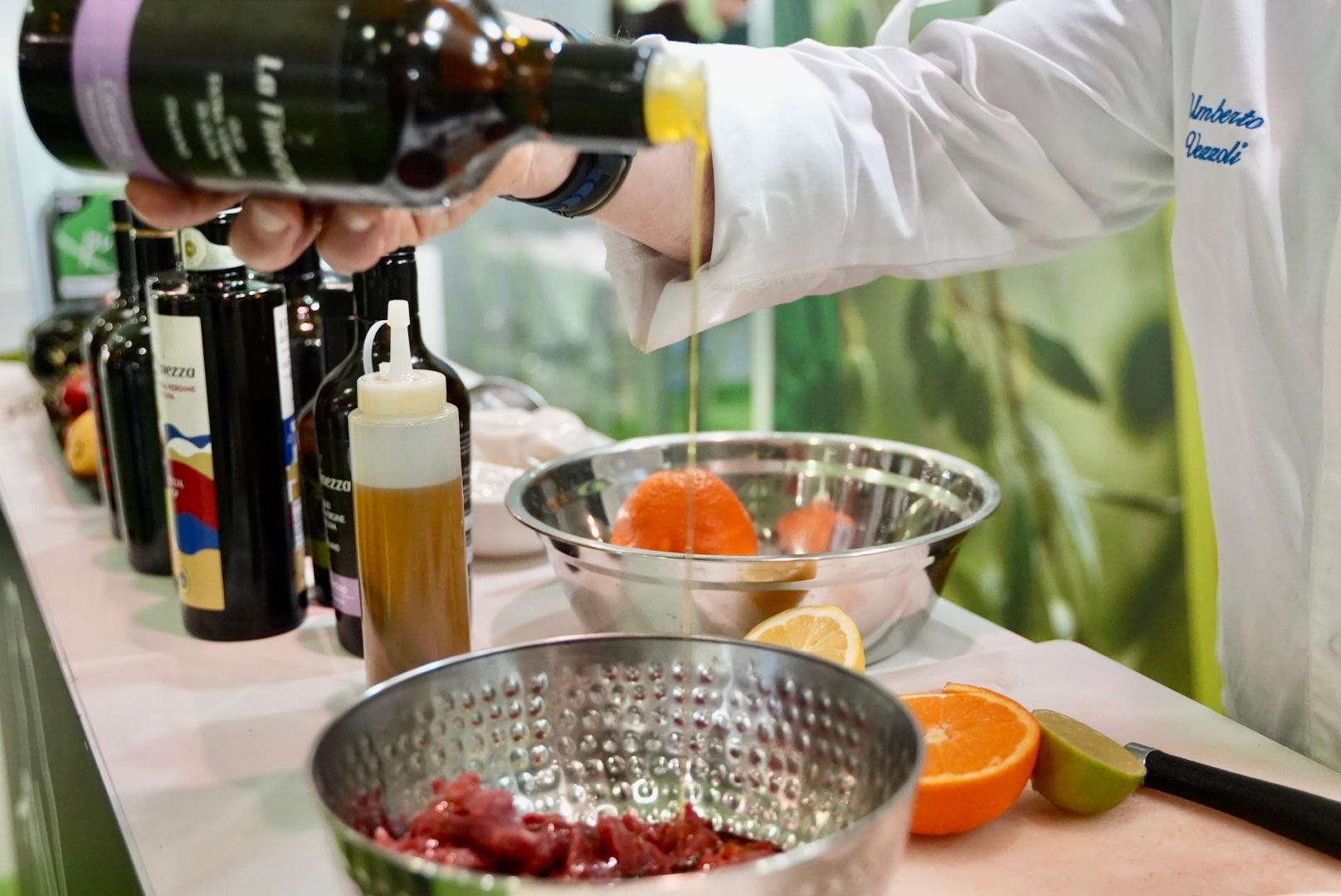
It is precisely this relationship that is the focus of Gianvito Matarrese’s reflections—he is the chef at the EVO restaurant in Alberobello and a featured guest on one of the episodes of the EVOLIO Podcast. According to Matarrese, chefs must become advocates for olive oil, helping to highlight its characteristics and promote a more informed use of it in the kitchen. This approach goes beyond viewing extra virgin olive oil as merely an ingredient and recognizes it as a central element of the dining experience.
In his restaurant, this vision translates into a selection of oils to pair with various dishes, through an experience that highlights the cultivars, organoleptic characteristics, and production methods. An important role is also played by tasting and the figure of the oil sommelier, who guides customers in discovering the different expressions of extra virgin olive oil. The restaurant thus becomes a place for learning about the product, where consumers can learn to recognize and appreciate the differences between oils, gaining a deeper understanding of their value.
This challenge involves not only chefs but the entire supply chain, which is called upon to invest in training and in fostering a culture of extra virgin olive oil that has yet to be fully established. The ability to showcase extra virgin olive oil at the table can, in fact, help strengthen its recognition even beyond national borders, offering international consumers new opportunities to experience the quality and variety of Italian production.
And what, on the other hand, are international operators looking for when they meet with Italian producers?
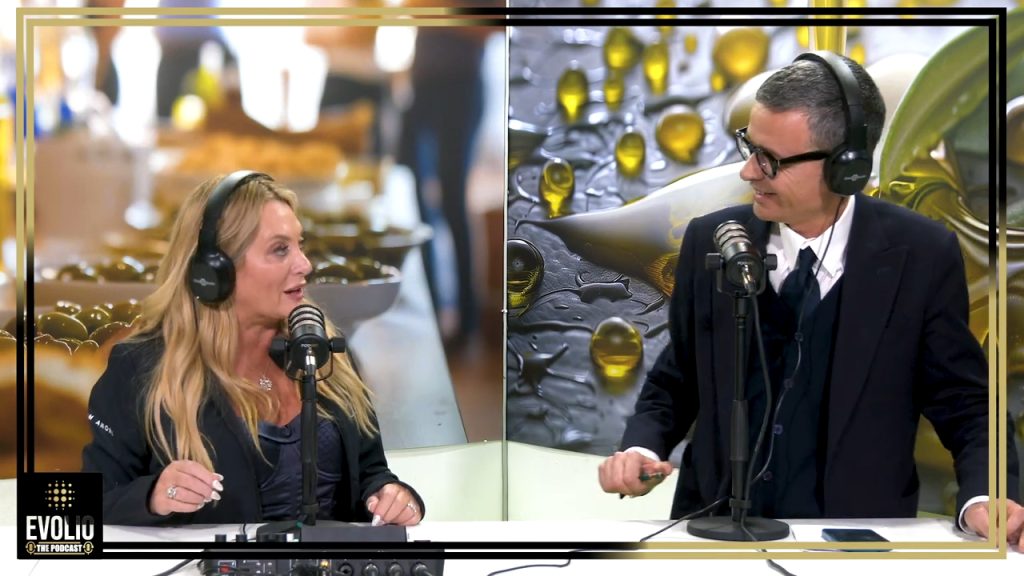
Offering the American market’s perspective is Lisa Ann Marchesi, an Italian-American entrepreneur with experience importing extra virgin olive oil into the United States, who appeared on an episode of the EVOLIO Podcast International Edition. Marchesi emphasizes that, when selecting an EVO oil, it’s not just taste and quality that matter, but also the opportunity to gain a deep understanding of the product, its characteristics, and the people who produce it.
“I’ve spent nearly ten years in this industry, studying everything related to extra virgin olive oil,” says Marchesi. “One of my favorite cultivars is Coratina, because of its polyphenol content. What matters to me are quality, taste, and the people with whom I can build business relationships.”
This approach is also evident in his account of her experience at EVOLIO Expo, where meeting with companies provides an opportunity to learn about new products and assess their potential for the U.S. market.
“When I meet producers, the first thing I notice is the bottle: I look for something that stands out, that catches my eye and makes me want to find out what it tastes like,” explains Marchesi. “Then I want to taste the oil and recognize its characteristics. Finally, I ask for information about the polyphenols and want to see the lab analyses. I want to know exactly what I’m buying.”
Packaging, tastings, technical information, and direct contact with producers thus become factors that can influence the decisions of foreign buyers. Quality remains the starting point, but to highlight it, it must be made recognizable and understandable—especially in markets where the culture of Italian extra virgin olive oil still has significant room for growth.
In this process, communication and food education are important tools for expanding the possibilities for using EVO, including through less traditional culinary pairings. Marchesi emphasizes the need to educate American consumers not only about the product’s characteristics but also about its versatility in the kitchen, moving beyond a view that tends to regard it as merely a condiment.
It is precisely from the intersection of product culture, culinary expertise, and commercial relationships that new opportunities for Italian EVO can emerge in international markets. The restaurant industry helps raise awareness of its value, while dialogue with buyers and importers allows companies to better understand the needs of different markets and effectively showcase the distinctive characteristics of their products.
With this in mind, EVOLIO Expo 2027 aims to serve as a meeting point for producers, foodservice professionals, and Italian and international buyers, creating opportunities for dialogue and business to strengthen the presence of Italian extra virgin olive oil in the markets. This objective is part of the event’s growth trajectory and is reflected in the results of the second edition, during which 50 international buyers from 16 strategic countries held over 700 meetings with exhibiting companies. The third edition will retain the format that characterizes EVOLIO Expo, featuring B2B meetings, talks, conferences, guided tastings, masterclasses, tasting courses, cooking demonstrations, and in-depth discussions with producers, buyers, experts, chefs, doctors, researchers, and institutional representatives. The program will once again center on the event’s three main themes: “Oil is Health,” dedicated to the relationship between extra virgin olive oil and well-being; “Oil is Tourism,” focused on the potential of olive oil tourism and the promotion of olive-growing regions; and “Oil is Innovation,” dedicated to new technologies, advanced production models, and solutions for a more competitive and sustainable supply chain.
For further information: MY PR Press Office
Roberto Grattagliano – 338 9291793 – roberto.grattagliano@mypr.it
Marta Rutigliano – 351 0397141 – marta.rutigliano@mypr.it